Vatva, Ahmedabad, Gujarat
- GST NO. : 24AFIPJ8131Q1Z1


Posted by Commercial Solar Dryer on August, 14, 2026
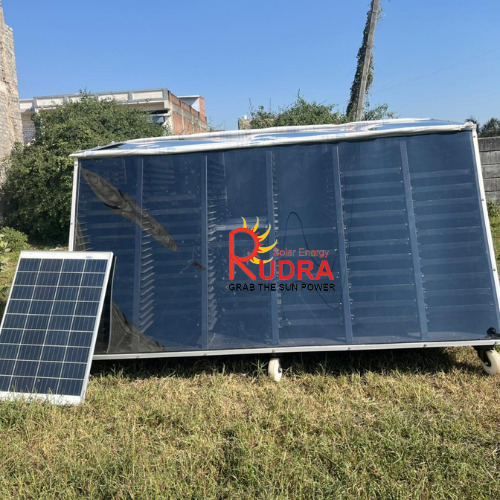
Uttarakhand’s agricultural landscape is very different from a typical single-crop processing region. From the Tarai and Bhabar plains to mid-hill and high-altitude farming belts, growers work with fruits, vegetables, grains, pulses, spices, medicinal plants and seasonal hill produce under very different climatic conditions.
The Uttarakhand Horticulture Department itself highlights the state’s potential in horticulture, agro-processing, off-season vegetables, organic farming, and medicinal and aromatic plants. Its agro-climatic profile lists produce ranging from mango, litchi and guava in lower areas to peach, plum, pear, apple, potato, peas, millets and other hill crops at higher elevations.
For farmers, FPOs, SHGs and food-processing businesses, this diversity creates an important opportunity: processing suitable fresh produce into stable, value-added dried products instead of depending only on the fresh market.
A properly selected solar dryer in Uttarakhand can become one part of that post-harvest processing system.
.png)
Uttarakhand Needs More Than One Standard Drying Approach
A major strength of Uttarakhand is also a processing challenge: the commodity changes dramatically from one location and season to another.
Official state horticulture information identifies rice, wheat, mustard, potato, chilli, peas, pulses, soybean, mango, guava, peach and plum across lower and mid-hill zones, while higher-altitude areas include apple, pear, stone fruits, potato, amaranth and other crops.
These commodities should not be dried with one universal process.
Apple slices behave differently from leafy medicinal herbs.
Plums do not load onto trays like grains.
Chilli has different moisture and airflow requirements from potato slices.
Medicinal and aromatic plant material may require more careful temperature selection than many bulk agricultural commodities.
This is why a solar dryer for agricultural products should be selected around the actual material, fresh quantity, preparation, tray area, airflow and production requirement.
Hill Fruits: Creating Value Beyond the Fresh Market
Apple, peach, plum and pear are particularly relevant to Uttarakhand’s hill horticulture. The state’s official agro-climatic profile identifies these fruits across its mid- and high-hill zones.
Fresh fruit has a limited marketing window, particularly when harvesting is concentrated within a short period.
Where technically and commercially appropriate, selected fruits can be prepared for dehydration as:
Apple slices
Pear slices
Peach pieces
Plum products
Other compatible fruit preparations
A solar dryer for fruits or solar fruit dehydrator can support moisture reduction after suitable washing, sorting, cutting or other required preparation.
The dryer itself does not perform these preparation steps, nor does drying alone guarantee a fixed shelf life. Final stability depends on the product, moisture endpoint, hygienic handling, cooling, packaging and storage.
Herbs and Medicinal Plants: A Strong Uttarakhand-Specific Opportunity
Medicinal and aromatic plants deserve a separate place in Uttarakhand’s drying strategy rather than being treated as an afterthought.
Government sources identify medicinal and aromatic plants as an area with particular potential in the state, and Uttarakhand continues to support cultivation and processing initiatives around this sector.
Depending on the actual plant material and intended use, a solar herb dryer may support suitable:
Leaves
Herbal raw materials
Aromatic plant material
Culinary herbs
Selected medicinal plant materials
However, “medicinal plant” is a broad category.
Leaves, stems, roots, flowers and other plant parts can have different drying requirements. A processor should therefore determine suitable preparation, loading depth, airflow and temperature for the specific material rather than applying one standard drying programme.
Vegetables from Lower Hills to High-Altitude Farms
Potato, peas, tomato, onion, cauliflower and other vegetables appear across several Uttarakhand farming zones.
For suitable vegetable-processing businesses, a solar vegetable dryer can support dehydration after the required preparation.
The important processing variables include:
Initial moisture
Slice or piece thickness
Tray loading
Product-layer depth
Airflow
Temperature
Ambient humidity
Required final moisture condition
A processor working with sliced potato, for example, should not automatically use the same loading or operating conditions as tomato or leafy material.
Multi-product processing works best when the system is flexible but the process remains commodity-specific.
Spices and Chilli Processing
Chilli is included among crops grown in parts of Uttarakhand’s lower-hill agricultural zones.
This creates another potential use for a solar spice dryer.
For chilli and other suitable spice commodities, the processor should consider incoming moisture, whole or prepared form, tray depth, airflow and the required final condition.
A commercial drying operation should not simply aim for maximum chamber temperature.
Moisture reduction depends on the interaction between:
Heat + Airflow + Product Loading + Humidity + Commodity Characteristics
This technical balance matters whether the equipment is described as a solar dryer, solar dehydrator, solar food dryer or spice drying machine.
Millets, Grains and Agricultural Produce
Uttarakhand’s crop profile also includes rice, wheat, maize, finger millet, amaranth, pulses, oilseeds and other agricultural commodities across different zones.
For suitable grain or agricultural-product applications, drying requirements are different from tray-based fruit or herb processing.
Bulk grains form product beds, making:
Incoming moisture
Bed depth
Air movement
Daily quantity
Storage requirement
important equipment-selection factors.
A commercial solar dryer used for agricultural produce therefore needs to be evaluated according to what the processor will actually handle rather than being chosen only from a nominal kilogram figure.
Why Enclosed Solar Drying Can Be Useful
Traditional open drying is simple, but the material remains directly exposed to outdoor conditions.
An enclosed solar drying system creates a more organised environment for moisture reduction and can help reduce direct exposure to dust, insects and sudden outdoor contamination compared with completely open drying.
Depending on the configuration, a solar dryer can combine:
Solar-assisted heating
Enclosed processing
Tray or structured loading
Controlled or forced airflow
Removal of moisture-laden air
Optional backup heating where required
But the dryer remains only one stage of processing.
Sorting, washing, cutting, blanching where appropriate, grinding, packaging and storage remain separate operations.
Mountain Conditions Make Airflow and Humidity Important
Uttarakhand’s geography ranges from lower plains to high Himalayan farming zones, and the state’s official profile shows substantial variation in altitude and rainfall between farming areas.
That matters for drying.
Solar radiation supplies useful thermal energy, but ambient temperature, humidity and weather conditions still influence moisture removal.
As moisture leaves the product, the surrounding drying air becomes more humid. That moisture-laden air must move away for drying to continue effectively.
This makes airflow management particularly important.
Where businesses require greater operating flexibility during variable weather, an appropriate hybrid solar dryer with optional backup may be evaluated.
The requirement should be based on production schedules and actual local conditions rather than assuming every installation needs the same configuration.
Solar Food Dehydrator for FPOs, SHGs and Rural Processing
Uttarakhand’s diverse crop calendar can make multi-product processing particularly relevant.
An FPO or SHG may not need a machine dedicated to only one crop throughout the year.
A suitably configured solar food dehydrator may support separate batches of compatible:
Fruits
Vegetables
Spices
Herbs
Medicinal plant materials
Grains
Other agricultural produce
The key word is separate.
Multi-product capability should not mean mixing commodities or using one drying condition for everything.
Whenever the product changes, processors should reassess preparation, tray loading, airflow, temperature and the desired moisture endpoint.
Choosing Solar Dryer Capacity in Uttarakhand
Capacity should not be selected simply by asking:
“What is the biggest machine available?”
A more practical buyer should ask:
What commodity will be processed most often?
How much fresh produce arrives per day?
How much usable drying area does it require?
Is the material sliced, leafy, granular or bulky?
How many batches are needed during peak season?
Will different products be processed throughout the year?
What are the local weather conditions?
Is optional backup required?
For fruits and lightweight herbs, tray area can become as important as kilograms.
For grains, product-bed depth and airflow can become critical.
This is why correct dryer sizing begins with the commodity and production workflow.
Solar Dryer Price in Uttarakhand
Buyers searching for solar dryer price should also consider that there is no single price applicable to every processing requirement.
Cost can vary according to:
Capacity
Drying area
Number of trays
Chamber size
Construction
Airflow arrangement
Solar-only or hybrid design
Optional backup
Monitoring requirements
Installation
Customisation
A small farmer processing seasonal hill produce can require a very different configuration from an FPO or food-processing enterprise handling multiple commercial batches every week.
Comparing price makes more sense after defining the application.
From Harvest to Value Addition
The most useful role of solar drying in Uttarakhand is not simply replacing one drying method with another.
Its larger potential lies in helping suitable agricultural produce move through a more organised value-addition chain:
Harvest → Sorting → Preparation → Controlled Drying → Moisture Assessment → Cooling → Packaging → Storage / Market
For hill farmers and processors, this can create opportunities to work with produce beyond the immediate fresh-selling window.
But successful value addition still depends on product selection, processing discipline, packaging, food-safety practices, market demand and commercial planning.
The solar dryer supports the moisture-reduction stage; it does not guarantee market success by itself.
Solar Dryer Solutions for Uttarakhand
Rudra Solar Energy provides solar dryer systems for agricultural and food-processing requirements across different commodities and processing scales.
Depending on the application, systems can be evaluated for fruits, vegetables, spices, herbs, grains and other suitable agricultural products, with standard and customised configurations and optional backup where required.
For farmers, FPOs, SHGs and commercial processors searching for a solar dryer in Uttarakhand, solar food dehydrator, solar dryer for fruits and vegetables, solar dryer for agricultural products, commercial solar dryer or hybrid solar dryer, equipment selection should begin with four practical details:
commodity, fresh quantity, location and required daily processing capacity.
Those details make it possible to match the drying system with the actual processing requirement instead of relying on a one-size-fits-all solution.
Search
Recent Posts
- Solar Dryer in Dadra & Nagar Haveli and Daman & Diu for Food, Fruits, Vegetables & Seafood
- Solar Dryer in Lakshadweep for Coconut, Fish, Seafood & Island Food Processing
- Solar Dryer in Chandigarh for Food Processing, Fruits, Vegetables, Herbs & Spices
- Solar Dryer in Delhi for Food Processing, Fruits, Vegetables, Herbs & Spices
- Solar Dryer in Ladakh for Apricot, Apple, Seabuckthorn & High-Altitude Food Processing


Leave a Comment