Vatva, Ahmedabad, Gujarat
- GST NO. : 24AFIPJ8131Q1Z1


Posted by Commercial Solar Dryer on September, 02, 2026
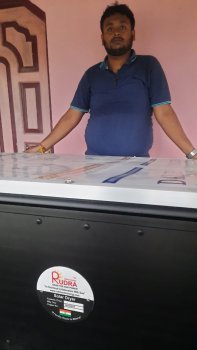
Chandigarh is a highly urbanised Union Territory with limited agricultural land, but its location between Punjab and Haryana and its connection with the wider Chandigarh–Mohali–Panchkula Tricity create a strong market for food handling, processing and value-added agricultural products. For Chandigarh-based food processors, MSMEs, startups, SHGs, traders, institutional kitchens, herbal businesses and commercial enterprises, solar drying can be used as a controlled moisture-reduction step for suitable fruits, vegetables, herbs, spices, seeds and other food or agricultural materials sourced locally or from surrounding producing regions. A Rudra Solar Dryer uses an enclosed drying chamber, solar thermal energy and managed airflow to support moisture removal while reducing direct exposure to dust, insects, birds and uncontrolled outdoor contact. Actual drying performance depends on the commodity, initial and target moisture, preparation, layer thickness, tray loading, airflow, relative humidity, solar radiation and prevailing weather.
.jpg)
1. Why is a solar dryer relevant in Chandigarh even though Chandigarh has limited farming?
Solar drying in Chandigarh should not be viewed only as a farm-level technology.
Chandigarh has limited agricultural land and a predominantly urban economy, which means its stronger opportunity lies in food processing, ingredient preparation, commercial drying and value addition.
Fresh agricultural produce can enter the Chandigarh-Tricity market from surrounding areas of Punjab, Haryana, Himachal Pradesh and other producing regions. Businesses receiving this material may need drying for storage, processing, powder preparation, ingredient production or development of value-added products.
Potential users can include:
- Food-processing MSMEs
- Food startups
- SHGs and small enterprises
- Fruit and vegetable processors
- Spice-processing businesses
- Herbal and Ayurvedic businesses
- Agricultural traders
- Institutional kitchens
- Ingredient manufacturers
- Commercial food processors
Solar drying can therefore form one stage of a broader processing chain rather than being limited to use directly on farms.
2. Which fruits, vegetables, herbs and spices can be dried using a solar dryer in Chandigarh?
A solar dryer in Chandigarh can be considered for many suitable commodities depending on the intended final product and drying requirement.
Fruits may include mango, apple, amla, banana, papaya, guava and other suitable fruits.
Vegetables may include tomato, onion, garlic, beetroot, okra, potato and selected leafy or seasonal vegetables.
Herbs and medicinal materials can include mint, tulsi, moringa leaves, neem leaves and other suitable botanical materials.
Spices can include chilli, turmeric, ginger, coriander, pepper and other compatible spice materials.
Seeds and agricultural ingredients may also be dried where controlled moisture reduction is required before storage or processing.
However, these commodities must not be treated as one uniform drying load.
A sliced apple, mint leaf, whole chilli, turmeric rhizome and onion slice differ in:
- Initial moisture
- Physical thickness
- Surface area
- Bulk density
- Temperature sensitivity
- Airflow requirement
- Required final moisture
- Intended end use
For this reason, one universal temperature or drying duration should not be applied to every product.
3. How can solar drying support food-processing businesses and MSMEs in Chandigarh-Tricity?
Solar drying can help businesses convert suitable agricultural materials into dried ingredients or value-added products where a commercially viable market exists.
Examples can include:
- Dried fruit slices
- Vegetable flakes
- Dried herbs
- Spice ingredients
- Ingredients for powders and mixes
- Selected medicinal plant materials
- Dried agricultural raw materials
- Inputs for packaged and value-added food products
A processor may receive fresh produce, clean and sort it, prepare it by slicing or other appropriate treatment, dry it to the required condition and then continue with grinding, blending, packaging or storage.
Solar drying should therefore be integrated into a complete processing workflow involving:
Raw-material selection → preparation → drying → moisture verification → hygienic handling → packaging → storage → marketing
This is particularly important for commercial users because installation of a dryer alone does not guarantee a successful value-added product.
Raw-material quality, drying practices, food safety, packaging, storage and market demand all influence the commercial outcome.
4. Is an enclosed solar dryer better than traditional open-sun drying in Chandigarh?
Traditional open-sun drying places material directly in the surrounding outdoor environment.
Depending on the location and method used, the product may be exposed to:
- Dust
- Insects
- Birds
- Wind-blown particles
- Uncontrolled outdoor contact
- Sudden weather changes
- Irregular loading surfaces
An enclosed solar dryer places the material within a defined drying chamber.
Solar radiation provides thermal energy, while airflow carries moisture away from the product.
Depending on the dryer configuration, solar-powered DC fans can assist forced air circulation.
Potential operational advantages include:
- Reduced direct exposure to environmental contamination
- Organized tray-based loading
- Better management of airflow
- More controlled batch handling
- Easier monitoring of the drying process
- Reduced dependence on roofs, roadsides or open ground for drying
However, an enclosed solar dryer should not be described as completely weather-independent.
Solar-only drying remains influenced by solar radiation, ambient temperature, relative humidity and cloud cover.
Its main advantage is a more protected and manageable drying process, not a promise of identical performance under every weather condition.
5. How do Chandigarh weather, humidity and seasonal conditions affect solar drying?
Solar drying performance changes according to environmental conditions.
The most important factors include:
Solar radiation:
Available solar radiation determines how much useful thermal energy can be captured by a solar-only system.
Relative humidity:
When the surrounding air contains more moisture, its ability to absorb additional moisture from the drying product decreases.
Ambient temperature:
Seasonal temperature influences operating conditions inside the drying chamber.
Cloud cover:
Reduced sunlight can lower useful thermal input.
Airflow:
Moisture released by the product must be carried away. Heat without adequate air movement does not automatically produce effective drying.
Product loading:
Overloading trays or creating very thick layers can restrict airflow and increase drying time.
For businesses requiring a predictable commercial production schedule, the choice between a solar-only and suitable hybrid system should therefore be based on the actual operating requirement.
A hybrid configuration may be considered where backup heat is required during periods of insufficient solar energy, subject to system design.
6. How long does solar drying take for fruits, vegetables, herbs or spices in Chandigarh?
There is no scientifically responsible single drying time for every commodity.
Actual drying duration depends on the interaction between the product, dryer and local conditions.
Important variables include:
- Commodity type
- Initial moisture
- Required final moisture
- Whole or sliced condition
- Slice thickness
- Preparation or pretreatment
- Layer depth
- Tray loading
- Airflow
- Drying temperature
- Relative humidity
- Solar radiation
- Weather
- Dryer design
For example, leafy herbs generally have a different loading density and temperature sensitivity from dense fruit slices.
Whole chilli behaves differently from sliced tomato.
Turmeric or ginger has different physical characteristics from an apple or amla slice.
Therefore, dryer selection should not be based primarily on claims such as “all products dry within a fixed number of hours.”
The correct approach is to determine the required final product condition and monitor drying accordingly.
7. How should a business choose the right solar dryer capacity and price in Chandigarh?
A solar dryer price in Chandigarh depends on the actual application and system configuration.
Before selecting a dryer, a processor should provide information such as:
- Commodity to be dried
- Fresh quantity per batch
- Initial moisture condition
- Required final product
- Whole, sliced, leafy or granular form
- Approximate tray-area requirement
- Expected number of batches
- Available installation space
- Seasonal or year-round utilisation
- Solar-only or hybrid requirement
Kilogram capacity alone should not determine dryer selection.
For example, 20 kg of leafy herbs may occupy considerably more drying area than 20 kg of a dense agricultural product.
Similarly, thick fruit slices and thin vegetable slices can have different airflow and drying requirements even when their fresh batch weight is similar.
A technically appropriate solar dryer should therefore be selected using:
Batch weight + tray area + commodity characteristics + airflow requirement + moisture target + operating schedule
rather than only the largest available capacity number.
8. Why consider a Rudra Solar Dryer for Chandigarh and Tricity applications?
A Rudra Solar Dryer can be considered by food processors, MSMEs, startups, SHGs, institutional users, traders and other businesses in Chandigarh and the wider Tricity region seeking an enclosed solar drying solution for suitable agricultural and food materials.
Rudra Solar Energy develops solar drying systems in different capacities and configurations for applications involving fruits, vegetables, herbs, spices, medicinal materials, grains, seeds and other compatible produce.
Depending on the selected system and application, important considerations can include:
- Enclosed drying chamber
- Managed airflow
- Solar-powered DC fans where applicable
- Organized tray loading
- Different capacity configurations
- Commodity-specific system selection
- Solar thermal operation
- Hybrid configuration where required by the process
For someone searching for a solar dryer in Chandigarh, solar drying machine in Chandigarh, commercial solar dryer Chandigarh, solar food dehydrator Chandigarh, solar dryer for fruits and vegetables, solar dryer for herbs and spices, or a solar dryer in Chandigarh-Tricity, the first step should be to define the actual processing requirement.
A useful enquiry should identify the commodity, batch quantity, preparation method, required final product, tray-area requirement, expected utilisation and operating conditions.
Final Answer: Is Solar Drying Suitable for Chandigarh?
Yes, solar drying can be relevant in Chandigarh even though the Union Territory has limited agricultural production because Chandigarh functions as an urban consumption, trading and service centre connected with major agricultural regions around it.
The strongest applications are likely to be linked with food processing, commercial value addition, ingredient preparation and moisture management rather than only conventional on-farm drying.
For suitable fruits, vegetables, herbs, spices, medicinal materials, seeds and other agricultural products, an enclosed solar dryer can provide a more protected environment for controlled moisture reduction.
However, drying performance is always application-specific. Commodity characteristics, initial and target moisture, preparation, slice thickness, tray loading, airflow, temperature, humidity, solar radiation and weather should all be considered.
For Chandigarh-based processors and enterprises, the most appropriate Rudra Solar Dryer should therefore be selected according to the actual commodity, batch size and commercial processing requirement rather than using one universal capacity, temperature or drying-time claim.
Search
Recent Posts
- Solar Dryer in Chandigarh for Food Processing, Fruits, Vegetables, Herbs & Spices
- Solar Dryer in Delhi for Food Processing, Fruits, Vegetables, Herbs & Spices
- Solar Dryer in Ladakh for Apricot, Apple, Seabuckthorn & High-Altitude Food Processing
- Solar Dryer in Jammu & Kashmir for Apple, Saffron, Walnut & Apricot Processing
- Solar Drying in Puducherry: Value Addition for Fruits, Vegetables, Coconut, Herbs and Fish


Leave a Comment