Vatva, Ahmedabad, Gujarat
- GST NO. : 24AFIPJ8131Q1Z1


Posted by Commercial Solar Dryer on September, 03, 2026
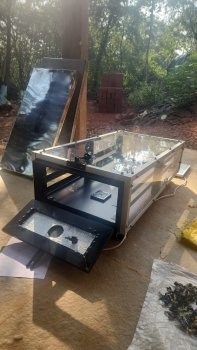
Lakshadweep’s island economy has strong potential for value-added processing of locally available coconut and marine resources. At the same time, high coastal humidity, saline surroundings, limited processing infrastructure and dependence on transport to mainland markets can make post-harvest handling challenging. An enclosed solar dryer can support controlled moisture reduction for suitable products such as coconut-based materials, fish and seafood, along with selected fruits, vegetables, herbs and spices. With protected tray-based drying and managed airflow, solar drying can help farmers, fishing communities, SHGs, cooperatives and small food-processing enterprises in Lakshadweep develop cleaner and more organized drying practices while utilizing locally available solar energy.

1. Which products can be dried using a solar dryer in Lakshadweep?
Solar dryers in Lakshadweep can be used for a range of suitable agricultural and marine products depending on the required final moisture level and processing method. Important applications can include coconut slices and other suitable coconut-based materials, fish, selected seafood products, fruits, vegetables, herbs and spices.
Product preparation is important. Fish may require cleaning, cutting or other preprocessing depending on the final product, while fruits and vegetables may require washing, peeling or slicing. Drying parameters should therefore be selected according to the specific commodity rather than applying one standard drying condition to every product.
2. Can a solar dryer be used for coconut and copra-related processing in Lakshadweep?
Yes. Coconut is one of the most relevant agricultural resources for Lakshadweep, making coconut drying an important potential application.
Solar drying can be used for suitable coconut products where controlled moisture reduction is required before storage or further processing. Proper loading, airflow and moisture monitoring are important because the drying requirement changes according to the form of coconut material, its initial moisture and the intended end product.
For coconut-related enterprises, an enclosed solar dryer can provide a more organized alternative to direct open-air exposure.
3. Is solar drying suitable for fish and seafood in Lakshadweep?
Yes. Fish and marine products are particularly relevant to Lakshadweep because of the islands’ fishing-based economy.
An enclosed solar dryer can support fish drying by providing a protected drying environment with managed airflow. Compared with direct open drying, the enclosed chamber helps reduce direct exposure to dust, insects, birds and uncontrolled outdoor contact.
Fish drying performance depends on factors such as fish species, size, whether the product is whole or cut, initial moisture, preparation method, tray loading, airflow, humidity and weather conditions. Therefore, the drying process should be designed specifically for the intended seafood product.
4. Why is controlled airflow important for solar drying in Lakshadweep?
Lakshadweep has a humid maritime climate, and atmospheric humidity can directly influence the rate at which moisture leaves a product.
Controlled or forced airflow helps move moisture-laden air away from the drying material and supports more consistent drying across loaded trays. This becomes especially important for high-moisture products such as fish, coconut, fruits and vegetables.
Drying performance still depends on solar radiation, relative humidity, ambient temperature, batch loading and product characteristics, so airflow and loading should be planned together rather than considered separately.
5. How can solar drying help small island food-processing businesses?
Solar drying can support local value addition by allowing suitable fresh products to be converted into dried ingredients or processed products with lower moisture content.
Potential users in Lakshadweep include:
- Fishing communities and fish processors
- Coconut growers and coconut-based enterprises
- SHGs and women-led processing groups
- Cooperatives
- Small food-processing businesses
- Rural and island entrepreneurs
Drying locally may also create opportunities for better utilization of seasonal produce and for developing packaged, processed or value-added products before they are transported to larger markets.
6. Is an enclosed solar dryer better suited to Lakshadweep than open sun drying?
For many food-processing applications, an enclosed solar dryer provides important practical advantages over direct exposure in the open.
The drying material remains inside a protected chamber, which helps reduce direct contact with dust, insects, birds and other outdoor contaminants. Controlled airflow can also provide a more organized drying environment than simply spreading the material outdoors.
However, drying results still depend on product preparation, loading density, solar availability, humidity and the required final moisture level. A solar dryer should therefore be selected according to the actual commodity and processing requirement.
7. What factors should be considered when selecting a solar dryer for Lakshadweep?
The system should be selected according to the real processing requirement rather than capacity alone. Important factors include:
- Product or commodity to be dried
- Fresh batch quantity
- Initial moisture content
- Desired final moisture
- Product size or slice thickness
- Tray loading and layer depth
- Required airflow
- Local humidity and weather
- Available installation space
- Expected daily or seasonal production
Island logistics should also be considered when planning the dryer capacity and configuration. A properly sized system can be easier to operate and integrate into an existing processing activity.
8. Where can businesses and communities in Lakshadweep get a solar dryer for coconut, fish and food processing?
Rudra Solar Energy provides enclosed solar drying solutions for suitable agricultural, food and marine applications with controlled airflow and multiple capacity options. Solar drying systems can be selected according to the commodity, fresh batch quantity, processing requirement and local operating conditions.
For Lakshadweep, applications can be evaluated for coconut-based materials, fish and seafood, fruits, vegetables, herbs, spices and other suitable products. Fishing communities, SHGs, cooperatives, food processors and island entrepreneurs can select a system based on their actual batch size and intended end product.
For an application-based solar dryer recommendation, share the product to be dried, fresh batch quantity and location in Lakshadweep with Rudra Solar Energy.
Search
Recent Posts
- Solar Dryer in Lakshadweep for Coconut, Fish, Seafood & Island Food Processing
- Solar Dryer in Chandigarh for Food Processing, Fruits, Vegetables, Herbs & Spices
- Solar Dryer in Delhi for Food Processing, Fruits, Vegetables, Herbs & Spices
- Solar Dryer in Ladakh for Apricot, Apple, Seabuckthorn & High-Altitude Food Processing
- Solar Dryer in Jammu & Kashmir for Apple, Saffron, Walnut & Apricot Processing


Leave a Comment