Vatva, Ahmedabad, Gujarat
- GST NO. : 24AFIPJ8131Q1Z1


Posted by Commercial Solar Dryer on August, 29, 2026
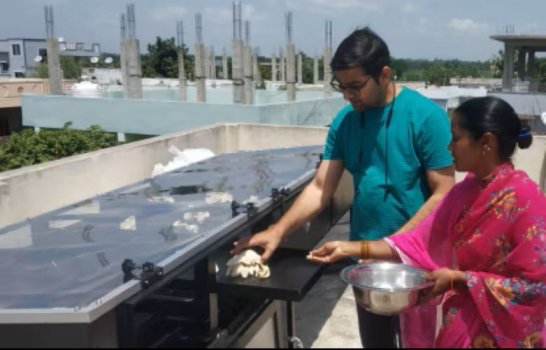
Solar Dryer in Jammu & Kashmir for Apple, Saffron, Walnut & Apricot Processing
Jammu & Kashmir has a strong horticulture economy built around fresh fruits, dry fruits and high-value crops. Apples, apricots, cherries, pears, plums and saffron are among the products listed by the J&K Horticulture Planning & Marketing Department, while walnuts and almonds form an important part of the region’s dry-fruit sector. The Union Territory has also been identified as an Agri Export Zone for apples and walnuts.
For orchard growers, farmers, FPOs, SHGs and food-processing enterprises, the challenge is not only to produce a good crop but also to manage seasonal harvests, moisture and post-harvest quality effectively. A properly selected solar dryer can support local value addition by providing an enclosed environment for moisture reduction and protecting produce from direct exposure to dust and insects during drying.

Why Solar Drying Is Relevant in Jammu & Kashmir
Jammu & Kashmir produces several commodities that require different forms of post-harvest handling. Apples may be converted into dried slices or other processed products. Apricots can be dried for value-added use. Walnuts require careful post-harvest moisture management before storage, while saffron needs highly controlled and careful drying after stigma separation.
This makes solar drying particularly relevant as a commodity-specific processing technology, rather than simply a replacement for leaving produce in the open sun.
An enclosed solar dryer can help processors:
-
Reduce moisture under a protected drying environment
-
Reduce direct exposure to dust and insects
-
Use tray-based loading for better product handling
-
Create value-added dried fruit and vegetable products
-
Process suitable seasonal produce closer to the production area
-
Standardize preparation and drying practices across batches
-
Develop products for further processing, packaging or sale
Actual drying performance, however, depends on the commodity, initial moisture, preparation, loading, airflow, solar radiation, ambient humidity and the final moisture level required.
Apple Drying for Value-Added Processing
Apple is one of the most commercially important horticultural crops associated with Jammu & Kashmir, and the official J&K horticulture system identifies apples as a major product of the region.
Not every apple needs to enter the market only as fresh fruit. Suitable produce can also be processed into products such as:
-
Dried apple slices
-
Apple pieces for food formulations
-
Dried ingredients for bakery and cereal applications
-
Apple products for further grinding or processing
For drying, apples are generally washed, sorted and sliced to an appropriate and reasonably uniform thickness. The prepared pieces should be arranged without excessive overlapping so that heated air can move around the product effectively.
Slice thickness is particularly important. Thick and thin slices loaded together may not lose moisture at the same rate, creating an uneven final batch.
A solar dryer selected for apple processing should therefore be evaluated not merely by its stated kilogram capacity but also by usable tray area, airflow distribution, loading pattern and the processor’s daily fresh-input requirement.
Apricot, Pear, Plum and Cherry Drying
J&K’s official horticultural product list also includes apricot, cherry, pear and plum.
These fruits create another opportunity for diversified processing rather than depending entirely on fresh-market movement.
Depending on the fruit and intended final product, preparation may involve washing, grading, cutting, pitting or slicing before loading.
Processors need to pay particular attention to:
-
Fruit maturity
-
Piece size
-
Pretreatment where required
-
Tray-loading density
-
Air circulation
-
Final moisture requirement
-
Packaging immediately after suitable cooling and conditioning
The objective should be controlled moisture reduction, not simply making the outside of the fruit appear dry.
This distinction is important for commercial processors because excessive residual moisture or non-uniform drying can affect subsequent storage quality.
Walnut Post-Harvest Moisture Management
Walnuts are another important J&K product, and the J&K Horticulture Planning & Marketing Department identifies the region as an Agri Export Zone for apples and walnuts.
Walnuts should not be treated exactly like sliced fruits.
After harvesting and appropriate post-harvest preparation, moisture management of walnuts is important before storage. The drying approach must account for whether the processor is handling walnuts in shell, kernels or another processed form.
A solar drying system used for walnuts therefore needs suitable airflow and operating conditions for the particular product being processed.
Processors should avoid assuming that the drying settings used for apple slices, herbs or vegetables can automatically be applied to walnuts.
Careful Drying of Saffron
Saffron is one of the high-value products officially associated with Jammu & Kashmir’s horticulture sector.
Saffron requires a very different drying approach from high-moisture fruits.
After flowers are harvested and stigmas are separated, drying becomes an important quality-sensitive processing step. Because saffron is a delicate, high-value material, temperature exposure, drying duration, product quantity and airflow need to be carefully controlled.
For this application, the question should not simply be:
“Can a solar dryer become hot enough?”
A better question is:
“Can the system provide drying conditions suitable for the specific saffron-processing requirement?”
This is why saffron processors should evaluate temperature management and operating control before selecting a drying system. A generic fruit-drying cycle should never automatically be applied to saffron.
Vegetables, Mushrooms, Herbs and Aromatic Produce
Apart from orchard produce and dry fruits, selected vegetables, mushrooms, herbs and aromatic plant materials can also be considered for controlled drying where technically suitable.
Different products require different preparation.
Leafy material usually needs a loading approach very different from fruit slices. Mushrooms have their own moisture and texture characteristics. Vegetables may require slicing or other pretreatment depending on the intended dried product.
For every application, processors should establish a repeatable procedure covering:
Raw material selection → preparation → tray loading → drying → moisture assessment → cooling → packaging → storage
A solar dryer becomes more useful commercially when it is integrated into this complete processing workflow rather than considered as an isolated machine.
Solar Dryer vs Open-Sun Drying in Hill and Orchard Regions
Traditional open-sun drying places food directly in the surrounding environment, where the product may be exposed to dust, insects and changing weather conditions.
An enclosed solar dryer provides greater physical protection and allows produce to be arranged on trays within a dedicated drying chamber.
This can be especially useful for processors handling premium horticultural produce where cleanliness, organized batch handling and moisture control matter.
However, an enclosed solar dryer does not make drying independent of weather. Solar radiation, ambient temperature and humidity still influence solar-only drying performance. Where processing must continue during weak-sun or adverse-weather periods, buyers should evaluate whether an appropriate hybrid or backup configuration is required.
Who Can Use a Solar Dryer in Jammu & Kashmir?
Potential users include:
-
Apple and other orchard growers
-
Fruit-processing entrepreneurs
-
Walnut and dry-fruit processors
-
Saffron growers and processors
-
Farmer Producer Organisations
-
Agricultural cooperatives
-
Women-led Self-Help Groups
-
Food-processing MSMEs
-
Rural entrepreneurs
-
Herb and aromatic-product processors
-
Institutions and agricultural development projects
The suitable capacity will differ considerably between a small SHG testing dried fruit products and an FPO handling larger seasonal volumes.
How to Select the Right Solar Dryer Capacity
One of the most important buying decisions is capacity.
A processor should not select a solar dryer simply because a larger kilogram number appears more attractive.
Before selecting a system, estimate:
-
What commodity will be processed?
-
How much fresh material needs to be handled per batch or per day?
-
How much usable tray area is required?
-
How thick will the material be sliced or prepared?
-
Can the product be loaded in an appropriate layer without overcrowding?
-
What airflow does the commodity require?
-
What are the typical operating weather conditions?
-
Is solar-only operation sufficient?
-
Is backup or hybrid operation required?
-
What final moisture condition is required before packaging or storage?
Rudra Solar Dryer systems are available for different processing requirements and capacities. The appropriate configuration should be selected according to the actual commodity and production requirement rather than assuming that one dryer size is suitable for every application.
There Is No Universal Drying Time
A common mistake in commercial drying is looking for one fixed answer such as:
“How many hours will it take?”
There is no technically accurate universal drying time for apples, apricots, walnuts, saffron, vegetables and herbs.
Drying duration can change according to:
-
Initial product moisture
-
Required final moisture
-
Commodity and variety
-
Fruit maturity
-
Slice thickness
-
Pretreatment
-
Quantity loaded
-
Tray-loading density
-
Airflow
-
Drying temperature
-
Ambient temperature
-
Relative humidity
-
Solar radiation
-
Season
-
Local weather
-
Dryer configuration
Even two batches of the same crop can behave differently if their starting conditions or preparation are different.
Commercial drying should therefore focus on achieving the required product condition rather than following an arbitrary number of hours.
From Seasonal Produce to Value-Added Products
Solar drying can provide J&K growers and processors with another pathway for using suitable agricultural produce.
Fresh apples can become dried apple products. Apricots and other fruits can enter dried-food applications. Herbs and selected vegetables can be processed for further value addition. Walnuts can undergo appropriate post-harvest moisture management, while high-value saffron can be handled through a carefully controlled drying procedure suited to its specific requirements.
The commercial opportunity comes from combining the dryer with good processing practices: correct preparation, appropriate capacity, proper airflow, moisture control, hygienic handling, suitable packaging and a real market for the final product.
Building Better Solar Drying Operations in Jammu & Kashmir
Jammu & Kashmir’s combination of apples, walnuts, saffron, apricots and other horticultural produce creates substantial scope for differentiated food-processing activities. The strongest solar-drying operation is not the one that simply purchases the biggest machine; it is the one that matches the dryer, tray area, airflow, preparation method and operating procedure to the commodity being processed.
For farmers, FPOs, SHGs and food-processing businesses exploring a solar dryer in Jammu & Kashmir, the first step should be to define the crop, fresh-input quantity, intended dried product and processing objective.
That approach can help turn solar drying from a basic moisture-removal activity into a more structured value-addition process for Jammu & Kashmir’s horticultural produce.
Search
Recent Posts
- Solar Dryer in Dadra & Nagar Haveli and Daman & Diu for Food, Fruits, Vegetables & Seafood
- Solar Dryer in Lakshadweep for Coconut, Fish, Seafood & Island Food Processing
- Solar Dryer in Chandigarh for Food Processing, Fruits, Vegetables, Herbs & Spices
- Solar Dryer in Delhi for Food Processing, Fruits, Vegetables, Herbs & Spices
- Solar Dryer in Ladakh for Apricot, Apple, Seabuckthorn & High-Altitude Food Processing


Leave a Comment