Vatva, Ahmedabad, Gujarat
- GST NO. : 24AFIPJ8131Q1Z1


Posted by Commercial Solar Dryer on August, 24, 2026
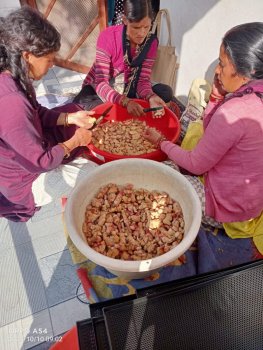
Mizoram has strong potential for value-added processing of ginger, turmeric, Mizo bird’s-eye chilli, pineapple, passion fruit, banana, herbs and other horticultural produce. However, the state’s humid climate, extended rainy season, cloudy conditions and hilly terrain can make conventional open-sun drying difficult and inconsistent.
A properly selected commercial solar dryer in Mizoram can provide an enclosed environment for drying prepared agricultural produce. It can help protect the material from direct exposure to dust, insects, animals and sudden rain while supporting controlled airflow and moisture removal.
The right solar drying system must be selected according to the commodity, fresh processing quantity, initial moisture, target final moisture, slice thickness, tray area, airflow requirement, local humidity and available sunlight. For commercial projects operating during the monsoon or extended cloudy periods, an optional hybrid heat source may also need to be evaluated.
.jpg)
Why Is Solar Drying Relevant for Mizoram?
Mizoram produces a wide variety of horticultural and spice crops. Ginger, turmeric, bird’s-eye chilli, pineapple, passion fruit, banana, mandarin, papaya and black pepper are among the crops associated with the state’s agricultural landscape.
Many of these commodities contain high levels of moisture when harvested. Fresh produce may have a limited marketing window, particularly when transport is delayed or market prices fall during peak harvesting periods.
Drying can convert suitable fresh produce into products such as:
- Dried ginger slices
- Dried turmeric fingers or slices
- Dried whole chilli
- Pineapple slices
- Dried banana slices
- Passion fruit leather or dried fruit preparations
- Dried herbs and medicinal plant material
- Spice ingredients for further grinding and packaging
Drying is only one stage of value addition. Washing, sorting, peeling, slicing, blanching, curing, grinding, packaging and food-safety testing may require separate equipment or processing steps.
Challenges of Open-Sun Drying in Mizoram
Open-sun drying is inexpensive, but it can become difficult in a high-humidity and high-rainfall region.
Produce spread on the ground, tarpaulins or open platforms may face:
- Sudden rainfall and interrupted drying
- Reabsorption of moisture during humid conditions
- Exposure to dust, insects, birds and animals
- Uneven drying between different portions of the batch
- Product losses during handling
- Difficulty maintaining uniform slice thickness and tray loading
- Increased spoilage risk when moisture removal is too slow
- Inconsistent colour, texture and final moisture
An enclosed solar dryer reduces direct environmental exposure. Depending on the model, airflow may be supported by natural circulation or DC-powered fans. Warm air passes through or around the loaded material and carries released moisture away from the drying chamber.
The chamber must have adequate air exchange. Simply heating a closed chamber without removing humid air will not produce efficient drying.
Solar Dryer for Ginger Processing in Mizoram
Ginger is one of the most commercially important applications for solar drying in Mizoram. The state agriculture department identifies ginger as an important crop and highlights local ginger types such as Thingpui and Thinglaidum.
Fresh ginger contains substantial moisture and is more difficult to store than properly processed dry ginger. Drying may help farmers, FPOs, SHGs and spice-processing enterprises develop products for longer marketing cycles or further processing.
A typical ginger-drying workflow may include:
- Sorting and removing damaged rhizomes
- Washing to remove soil and foreign matter
- Draining surface water
- Peeling or light scraping, if required by the final product
- Cutting the ginger into reasonably uniform slices
- Loading the slices in a thin, even layer
- Maintaining suitable airflow through the drying chamber
- Monitoring drying progress and final moisture
- Cooling the dried slices before packaging
- Grinding separately if ginger powder is required
Slice thickness has a major effect on drying performance. Thick or irregular pieces usually take longer to dry and may retain moisture at the centre. Overloading trays can also restrict airflow and create an uneven final product.
A solar dryer removes moisture from prepared ginger. It does not wash, peel, slice, grind, sterilize or package the product unless separate equipment is added to the processing line.
Solar Dryer for Turmeric in Mizoram
Turmeric requires a carefully planned process because drying generally follows cleaning and curing or boiling. The exact pre-treatment method depends on the variety, intended product and established processing protocol.
After the appropriate pre-processing stage, turmeric fingers or slices can be arranged on drying trays. Uniform loading and sufficient air movement help moisture escape from the product.
After drying, polishing, grinding and packaging are separate operations.
Processors should avoid selecting a dryer only by nominal batch weight. The required system depends on:
- Quantity of fresh turmeric processed per day
- Whether whole fingers or slices will be dried
- Moisture level after curing
- Target moisture for storage or grinding
- Available processing hours
- Harvest-season duration
- Local weather and humidity
- Required number of batches
Final moisture should be verified before the material is stored or ground. Warm dried turmeric should be allowed to cool in a clean environment before being packed in a suitable moisture-resistant package.
Solar Drying of Mizo Bird’s-Eye Chilli
Mizo bird’s-eye chilli is a high-value spice for which careful drying and handling are important. Slow or interrupted drying can affect appearance and increase the possibility of spoilage.
Before loading chilli into a solar dryer, processors should remove damaged, diseased or unsuitable fruits. The chilli should be cleaned according to the intended food-processing protocol and surface moisture should be allowed to drain.
Important considerations include:
- Uniform and shallow tray loading
- Adequate movement of air between the chillies
- Regular inspection during drying
- Avoiding unnecessary overheating
- Confirming final moisture before packaging
- Cooling the dried chillies before sealing
- Using suitable protective equipment during handling
Chilli dust and capsaicin can irritate workers during further processing or grinding. Appropriate masks, gloves, ventilation and operating procedures should therefore be considered.
Drying reduces moisture, but it should not be presented as a guaranteed sterilization step. Commercial processors may need laboratory testing and appropriate food-safety controls according to their target market.
Solar Dryer for Pineapple and Other Fruits
Pineapple is another important opportunity for fruit-processing enterprises in Mizoram. Fresh pineapple has high moisture content, which means its dried output weight will be substantially lower than its fresh input weight.
For pineapple drying, the process can include:
- Selection of mature and suitable fruits
- Washing and hygienic preparation
- Peeling and removal of unsuitable portions
- Cutting into uniform slices or pieces
- Applying a validated pre-treatment where required
- Arranging pieces without excessive overlap
- Drying with adequate airflow
- Checking the endpoint before cooling and packing
The dryer’s capacity should be calculated using the prepared fresh weight and the amount of water that needs to be removed. A machine described as suitable for a particular kilogram capacity may perform differently for pineapple, ginger, chilli and leafy herbs because each commodity has different moisture and loading characteristics.
Banana slices, papaya, passion fruit preparations and other fruits may also be evaluated through product trials. Anti-browning treatment, recipe formulation or food-grade tray liners may be required for certain products.
For passion fruit leather, pulp preparation, formulation and hygienic spreading must be completed before drying. A solar dryer does not extract juice or prepare the pulp automatically.
Can a Solar Dryer Work During Mizoram’s Monsoon?
Solar drying performance depends on solar radiation, ambient temperature, relative humidity, airflow, product preparation and the design of the dryer.
During clear weather, solar energy can raise the temperature of the drying air and support moisture removal. During persistent clouds or high humidity, the drying rate may become slower.
For processors who require regular production during the monsoon, a solar-hybrid dryer may be more appropriate. A hybrid system can be designed with an additional heat source, subject to the selected model and site requirements.
Before selecting a solar-only or hybrid system, the buyer should assess:
- Months in which processing will take place
- Number of rainy or heavily cloudy days
- Daily fresh material availability
- Permitted processing time per batch
- Electricity or alternative-energy availability
- Desired production continuity
- Installation space and site access
Hybrid support should be treated as an operational option, not as a substitute for correct product preparation, airflow, tray loading and moisture monitoring.
Who Can Use a Commercial Solar Dryer in Mizoram?
Commercial solar drying solutions may be useful for:
- Individual farmers developing value-added products
- Farmer Producer Organisations and Farmer Producer Companies
- Self-Help Groups and women-led enterprises
- Ginger and turmeric processors
- Chilli growers and spice-processing units
- Pineapple and fruit-processing enterprises
- Herbal and medicinal plant processors
- Food startups and rural entrepreneurs
- Cooperatives and livelihood-development programmes
- NGOs, CSR projects and government-supported institutions
- Training centres and agricultural organisations
Every user may require a different configuration. A farmer processing seasonal produce may need a smaller batch system, while an FPO collecting material from several villages may require a larger or modular installation.
How to Select the Right Solar Dryer Capacity
The right capacity should be based on production data rather than a general small, medium or large classification.
The supplier should be informed about:
- Exact commodity to be dried
- Present form of the material
- Fresh quantity available per day
- Expected dried output
- Initial and target final moisture
- Slice size or product thickness
- Current drying method
- Processing season and working days
- Desired batches per day
- Available installation area
- Electricity availability
- Local road and site-access conditions
- Requirement for solar-only or hybrid operation
Tray area can be as important as total chamber volume. Low-density leafy material may occupy a large tray area at a relatively low weight. Dense ginger or turmeric slices can have different loading and airflow requirements.
An excessively small dryer may create a processing backlog during the harvest season. An unnecessarily large system may remain underutilised and increase investment costs. Application-based sizing is therefore important.
Solar Dryer Price in Mizoram
There is no single standard price for every commercial solar dryer in Mizoram. The project cost can vary according to:
- Fresh batch capacity
- Total tray area
- Solar-only or hybrid configuration
- Natural or forced airflow
- Chamber and tray materials
- Type of auxiliary heating system
- Temperature and humidity monitoring
- Control-panel requirements
- Product-specific accessories
- Transportation to the project location
- Installation and site preparation
- Training and technical-support requirements
A useful quotation should specify the intended commodity, prepared fresh-input capacity, major construction materials, airflow arrangement, included accessories, power requirement and installation scope.
Buyers should avoid comparing systems only through an advertised kilogram number because capacity can change according to product density, moisture and tray-loading method.
Quality, Packaging and Storage After Drying
Drying alone does not guarantee shelf life, food safety or export acceptance. Product quality also depends on raw-material quality, hygiene, preparation, final moisture, water activity, packaging and storage.
After drying:
- Confirm that the target moisture has been reached.
- Remove the product using clean handling practices.
- Allow the product to cool before sealing.
- Avoid leaving dried material exposed to humid air.
- Use packaging suitable for the commodity and market.
- Store finished products away from moisture, pests and direct sunlight.
- Maintain batch records for commercial production.
- Conduct laboratory testing when required by the buyer or applicable regulation.
Packaging a product while it is still warm can allow condensation to develop inside the package. Similarly, properly dried material can reabsorb moisture if it remains exposed to Mizoram’s humid air.
Commercial processors should develop suitable food-safety procedures and follow applicable FSSAI, labelling and market requirements.
Why Consider Rudra Solar Energy?
Rudra Solar Energy has more than 20 years of experience in solar-based processing solutions. The company supports different applications through in-house research and development, application engineering and its Centre for Excellence.
Rudra’s solar drying solutions can be evaluated for:
- Multiple processing capacities
- Enclosed solar drying
- Solar-only configurations
- Optional hybrid configurations
- Commodity-specific tray and airflow requirements
- Agricultural, livelihood and commercial-processing projects
- Farmers, FPOs, SHGs, institutions and food enterprises
The most suitable model should be recommended only after understanding the product, moisture-removal requirement, daily throughput, local climate and site conditions.
Frequently Asked Questions
Which products can be dried using a solar dryer in Mizoram?
A solar dryer may be evaluated for ginger, turmeric, bird’s-eye chilli, pineapple, banana, papaya, passion fruit preparations, herbs and other suitable agricultural products. Each commodity requires a separate preparation, loading and drying protocol.
Can fresh ginger be loaded directly into the dryer?
Fresh ginger should normally be sorted, washed, drained and prepared according to the desired final product. Uniform slicing can improve consistency. Whole ginger and sliced ginger have significantly different drying behaviour.
Does a solar dryer work on cloudy days?
Drying may continue under certain cloudy conditions, but the drying rate can be lower because available solar energy is reduced and ambient humidity may be high. A hybrid system may be considered where regular monsoon-season production is necessary.
Does the dryer convert turmeric or ginger into powder?
No. The solar dryer removes moisture. Grinding requires a separate pulveriser or grinder after the dried material has cooled and reached a suitable moisture level.
How long does solar drying take?
There is no universal drying time. It depends on the commodity, initial moisture, final moisture, slice thickness, tray loading, airflow, temperature, humidity, solar radiation and dryer configuration.
Is hybrid backup necessary in Mizoram?
It depends on the production season, local weather, batch schedule and required continuity. Businesses processing during extended cloudy or rainy periods should evaluate hybrid support during technical sizing.
What information is required for a quotation?
For an accurate recommendation, share the commodity, current form, fresh quantity per day, desired dried output, initial and final moisture, current drying method, project location, processing season, available area, electricity availability and site photographs or videos.
Start a Solar Drying Project in Mizoram
Farmers, FPOs, SHGs, spice processors and fruit-processing enterprises planning a solar dryer project in Mizoram can contact Rudra Solar Energy for application-based technical guidance.
While requesting a recommendation, please provide:
- Product or commodity name
- Fresh processing quantity per day
- Product form and slice size
- Expected dried output
- Current drying process
- Project district and exact location
- Processing months
- Available installation area
- Electricity availability
- Solar-only or hybrid preference
- Site photographs or videos
This information helps determine the appropriate tray area, airflow arrangement, processing capacity and system configuration for the proposed application.
Rudra Solar Energy Pvt. Ltd.
Website: www.rudrasolarenergy.com
Phone: 7041262332, 9429446671
Email: sales@rudrasolarenergy.com
Email: rudrasolar@gmail.com
Search
Recent Posts
- Solar Dryer in Dadra & Nagar Haveli and Daman & Diu for Food, Fruits, Vegetables & Seafood
- Solar Dryer in Lakshadweep for Coconut, Fish, Seafood & Island Food Processing
- Solar Dryer in Chandigarh for Food Processing, Fruits, Vegetables, Herbs & Spices
- Solar Dryer in Delhi for Food Processing, Fruits, Vegetables, Herbs & Spices
- Solar Dryer in Ladakh for Apricot, Apple, Seabuckthorn & High-Altitude Food Processing


Leave a Comment