Vatva, Ahmedabad, Gujarat
- GST NO. : 24AFIPJ8131Q1Z1


Posted by Commercial Solar Dryer on August, 21, 2026
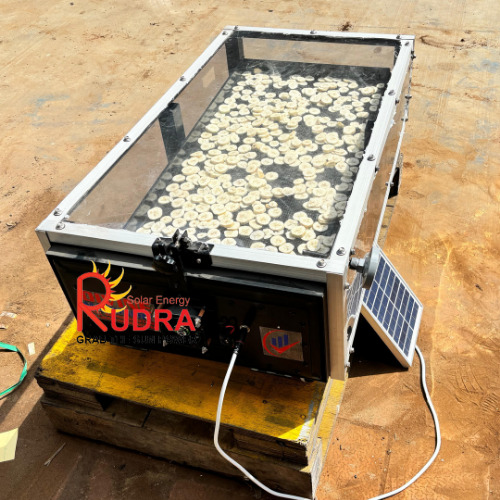
Manipur has a diverse horticultural and food-processing base built around pineapple, ginger, turmeric, chilli, passion fruit, citrus fruits, vegetables, medicinal plants and other high-value agricultural produce. The state’s high rainfall and humid monsoon conditions make post-harvest moisture management particularly important for farmers, FPOs, SHGs and food-processing enterprises handling perishable or moisture-sensitive crops. A Solar Dryer in Manipur can provide an enclosed, tray-based environment for controlled moisture reduction using solar thermal energy and organised airflow, with hybrid configurations available where additional operating flexibility is required. Manipur’s latest food-processing profile also identifies pineapple, ginger, turmeric, black rice and medicinal plants among important processing opportunities in the state.

Why is a Solar Dryer useful for farmers and food processors in Manipur?
Manipur receives substantial rainfall and supports a wide variety of fruits, vegetables and spices. Government horticulture information identifies the state’s agro-climatic conditions as suitable for pineapple, banana, papaya, oranges, lime, ginger, turmeric, chilli, vegetables, roots and tubers.
For suitable commodities, enclosed solar drying can help processors move beyond direct open-sun exposure by providing:
- Organised tray loading
- Controlled or forced air movement depending on configuration
- Enclosed product handling
- Reduced direct exposure to dust, insects, birds and animals
- Solar thermal heat for moisture removal
- Optional hybrid backup where required
However, drying performance still depends on the commodity, weather, preparation, initial moisture, tray loading, airflow and required final moisture.
Which products can be dried using a Solar Dryer in Manipur?
Depending on preparation and the intended final product, potential applications include:
- Pineapple
- Ginger
- Turmeric
- Chilli
- Hathei Chilli
- Passion Fruit
- Banana
- Suitable Citrus Materials
- Vegetables
- Leafy Vegetables
- Herbs
- Medicinal Plants
- Mushrooms
- Selected Grains and Seeds
- Other suitable agricultural produce
Manipur also has strong product identities around Hathei Chilli, Tamenglong Orange, Kachai Lemon and Chak-Hao black rice, all of which are recognised through GI registrations.
Not all of these materials require the same drying process, so dryer selection and operating conditions should be commodity-specific.
Can pineapple be dried using a Solar Dryer in Manipur?
Yes. Pineapple is one of the strongest commercial solar-drying opportunities for Manipur.
Suitable pineapple intended for dehydration may first require separate operations such as:
Sorting
Washing
Peeling
Core Removal
Cutting or Slicing
Suitable Pretreatment Where Required
The prepared pineapple can then be arranged on trays for moisture removal.
Drying time depends on slice thickness, initial moisture, tray loading, airflow, temperature, humidity and solar radiation.
The Solar Dryer performs the drying stage; peeling, cutting, packaging and manufacturing finished products remain separate processes.
Is a Solar Dryer suitable for ginger processing in Manipur?
Yes. Ginger is another important Manipur crop for value-added processing. The latest MoFPI state profile specifically highlights organic ginger among the state’s agricultural strengths.
Ginger can be dried in different prepared forms depending on the intended product.
For example:
Whole or thick material
Cut ginger
Sliced ginger
may have significantly different drying behaviour.
Smaller pieces generally provide greater exposed surface area, while thick material may require more time for moisture to move from the centre.
For a commercial Ginger Solar Dryer in Manipur, practical capacity should therefore be evaluated using prepared product form and usable tray area—not kilograms alone.
Can turmeric be dried using solar energy in Manipur?
Yes, properly prepared turmeric can be dried using an appropriate solar drying system.
However, turmeric processing can involve separate stages such as:
Cleaning
Curing or Boiling Where Required
Draining
Drying
Polishing
Grinding
Packaging
A Solar Dryer performs the moisture-removal stage only.
It should not be presented as a machine that automatically converts fresh turmeric into finished turmeric powder.
Turmeric is specifically identified among Manipur’s important horticultural and organic agricultural crops.
Can Hathei Chilli be dried using a Solar Dryer?
Yes. Chilli is suitable for solar drying where controlled moisture reduction is required.
Hathei Chilli is a registered GI product of Manipur, giving chilli processing an especially strong local identity for the state.
For chilli drying, important factors include:
Variety
Maturity
Initial Moisture
Whole or Prepared Form
Tray Loading
Airflow
Operating Temperature
Ambient Humidity
Required Final Moisture
Colour and quality should not be guaranteed by the dryer alone because raw material, temperature, drying duration and storage also affect the finished spice.
Can passion fruit, banana and citrus fruits be solar dried?
Suitable prepared fruits can be considered for solar drying where a dried fruit or ingredient is required.
Manipur’s food-processing profile identifies pineapple and passion fruit, while state horticultural information also notes banana, oranges and lime among crops suited to the region.
Fruit preparation may involve:
Sorting
Washing
Peeling
Deseeding
Cutting
Slicing
Suitable Pretreatment
Different fruits contain different levels of moisture and occupy different tray areas, so there is no one drying setting that applies to every fruit.
Is solar drying relevant for medicinal plants and herbs in Manipur?
Yes, suitable medicinal and aromatic plant material may require controlled drying as part of post-harvest processing.
The MoFPI state profile specifically identifies medicinal plants as part of Manipur’s agro-processing opportunity.
For herbs and medicinal plant materials, particular attention should be given to:
Plant Part
Raw Material Quality
Temperature Sensitivity
Layer Depth
Airflow
Drying Duration
Final Moisture
A Solar Dryer removes moisture. It does not by itself guarantee medicinal potency, therapeutic properties or regulatory compliance.
Can one Solar Dryer process pineapple, ginger, turmeric and chilli?
A suitably selected multipurpose solar dryer can potentially process different compatible commodities in separate batches.
However, multipurpose does not mean one universal process.
Pineapple slices, ginger, turmeric and chilli can differ significantly in:
Initial Moisture
Product Thickness
Bulk Density
Tray Area
Temperature Requirement
Airflow Requirement
Drying Duration
Final Moisture
Cleaning between different commodities should also be carried out according to processing requirements.
Does a 50 kg Solar Dryer hold 50 kg of every Manipur crop?
Not necessarily.
This is one of the most important points for farmers and FPOs selecting commercial drying equipment.
Fifty kilograms of pineapple slices may occupy a different amount of tray area from:
Fresh ginger
Turmeric
Chilli
Leafy herbs
or another product.
Actual usable capacity depends on:
Fresh Weight + Product Form + Initial Moisture + Bulk Density + Tray Area + Loading Depth + Airflow
Therefore, a dryer should be selected around the actual commodity, not only a nominal kilogram label.
What Solar Dryer capacity is suitable for a farmer, SHG or FPO in Manipur?
There is no single capacity suitable for every buyer.
Before selecting a system, calculate:
Main Commodity
Fresh Material per Batch
Daily Processing Requirement
Peak Seasonal Supply
Number of Batches per Day
Preparation Method
Usable Tray Area
Required Final Moisture
Available Installation Space
Solar-Only or Hybrid Requirement
A small SHG processing herbs or chilli may need a very different dryer from an FPO aggregating large quantities of pineapple or ginger.
Rudra Solar Energy offers different capacities and configurations according to processing requirements.
How long does solar drying take in Manipur?
There is no fixed drying time for every commodity.
Drying duration depends on:
Commodity
Initial Moisture
Required Final Moisture
Preparation
Slice or Material Thickness
Tray Loading
Airflow
Temperature
Ambient Humidity
Solar Radiation
Weather
Dryer Configuration
Research involving a solar cabinet dryer in Manipur has also demonstrated that local solar drying is technically practical for different fruits, vegetables and spices, but the measured results were specific to that experimental dryer and its conditions—not a universal performance figure for every commercial dryer.
How does Manipur’s humidity affect drying?
Humidity matters because drying air must be able to accept moisture released by the product.
When ambient air is already humid, moisture removal may become slower.
This makes the following particularly important in Manipur:
Good Air Movement
Correct Tray Loading
Suitable Layer Depth
Adequate Heat Input
Monitoring of Final Moisture
Weather Conditions
Possible Hybrid Backup for Commercial Schedules
Manipur’s horticultural profile notes high rainfall spread across the monsoon period, making moisture management a relevant post-harvest concern.
Is a Hybrid Solar Dryer useful in Manipur?
Yes. For some commercial processors, a Solar + Electric Hybrid Dryer can provide additional operating flexibility.
Hybrid backup may be useful during:
Cloudy Periods
Monsoon Conditions
High Humidity
Reduced Solar Radiation
Peak Harvest Season
Fixed Commercial Production Schedules
The additional energy source supplements solar drying where required.
It does not remove the need for appropriate tray loading, airflow, commodity preparation or temperature management.
Can a Solar Dryer work at night?
A standard solar-only dryer depends on solar radiation for normal thermal heating.
Therefore, solar-only heating does not continue at night in the same way.
Where night operation or reduced-sun operation is commercially important, an appropriate hybrid configuration should be considered.
Buyers should specifically ask whether the quoted dryer is:
Solar Only
or
Solar + Backup / Hybrid
rather than assuming all solar dryers operate continuously under all weather conditions.
Is a Solar Dryer better protected than open-sun drying?
An enclosed solar dryer provides a more protected environment than spreading food directly outdoors.
It can help reduce direct exposure to:
Dust
Insects
Birds
Animals
Ground Contact
Uncontrolled External Handling
However, the dryer does not automatically guarantee food safety.
Proper raw-material handling, cleaning, preparation, final moisture control, packaging and storage remain necessary.
Can solar drying support Manipur’s organic produce sector?
It can serve as a suitable moisture-reduction stage for organic produce where the process complies with the operator’s applicable production and handling requirements.
Manipur has a significant organised organic agriculture programme, and the latest MoFPI state profile specifically highlights organic pineapple, ginger, turmeric and passion fruit cultivation.
However:
Using a Solar Dryer does not make a product organic.
Organic status depends on the complete certified production, handling and processing chain.
This distinction is important for processors marketing certified products.
Is a Solar Dryer suitable for SHGs and rural entrepreneurs in Manipur?
Yes, depending on the commodity and business model.
Potential users include:
Farmers
Pineapple Growers
Ginger Growers
Turmeric Growers
Chilli Producers
FPOs and FPCs
SHGs
Women Entrepreneurs
Farmer Cooperatives
Tribal Producer Groups
Food Processing MSMEs
Organic Food Businesses
Herbal Processing Units
NGOs and Livelihood Projects
Common Processing Centres
Solar drying can form one part of a local value-addition business, but income depends on raw material, processing cost, product quality, packaging, market demand and sales channels.
Can a Solar Dryer automatically create export-quality products?
No.
A controlled dryer can support an organised post-harvest process, but export suitability depends on much more than drying equipment.
Requirements can include:
Correct Botanical or Commodity Identity
Final Moisture
Product Quality
Residue Limits
Microbiological Safety
Contamination Control
Traceability
Packaging
Storage
Buyer Specifications
Applicable Regulations
Manipur has GI and organic-product opportunities, but dryer ownership alone should never be presented as an export certification.
Can dried pineapple, ginger or turmeric be converted into powder?
Yes, where the dried material is suitable—but powder manufacturing is a separate processing step.
For example:
Ginger → Drying → Grinding → Ginger Powder
Turmeric → Appropriate Processing → Drying → Grinding → Turmeric Powder
Fruit → Drying → Further Processing Where Required
The Solar Dryer removes moisture; it does not grind, mill or package the finished product automatically.
What is the price of a Solar Dryer in Manipur?
Solar Dryer price in Manipur depends on capacity, construction and operating configuration.
Important price factors include:
Fresh Processing Capacity
Number of Trays
Usable Drying Area
Construction Material
Airflow System
Fan Configuration
Solar Panel
Solar-Only or Hybrid Operation
Backup Heating
Controls or Monitoring
Transportation
Installation Requirement
Customisation
Therefore, the most useful quotation request is not simply:
“What is the price of a 50 kg Solar Dryer?”
Instead provide:
Commodity + Fresh Quantity per Day + Location + Required Final Product + Solar/Hybrid Requirement
This allows the system to be evaluated according to the actual processing job.
How should I choose a Solar Dryer Manufacturer in Manipur?
Before buying, ask whether the supplier can explain:
What practical capacity applies to your actual commodity?
How much usable tray area is available?
Which tray material is supplied?
How is moisture-bearing air removed?
How is airflow managed?
What temperature range is possible?
Can the dryer handle Manipur’s humid conditions?
Is hybrid backup available?
How is the product protected from dust and insects?
What installation support is required?
What maintenance is needed?
What after-sales service is provided?
Has the underlying solar drying technology been tested or field-used?
A manufacturer should first understand what you want to dry and how much you need to process before recommending a model.
Why choose Rudra Solar Energy for solar drying in Manipur?
Rudra Solar Energy develops solar drying systems for agricultural, horticultural and food-processing applications in different capacities and operating configurations.
For Manipur, suitable applications can include pineapple, ginger, turmeric, chilli, fruits, vegetables, herbs, medicinal plants and other compatible agricultural produce.
The appropriate Rudra Solar Dryer can be evaluated according to:
Commodity
Fresh Processing Quantity
Material Preparation
Initial Moisture
Target Moisture
Usable Tray Area
Airflow Requirement
Local Weather
Daily Production Requirement
Solar-Only or Hybrid Operation
For farmers, FPOs, SHGs and processors searching for a Solar Dryer in Manipur, Solar Dryer Manufacturer in Manipur, Commercial Solar Dryer in Manipur, Solar Dryer Price in Manipur, Pineapple Solar Dryer, Ginger Solar Dryer, Turmeric Dryer, Chilli Solar Dryer or Hybrid Solar Dryer in Manipur, share the commodity and daily fresh-processing quantity with Rudra Solar Energy to discuss a suitable configuration.
Search
Recent Posts
- Solar Dryer in Dadra & Nagar Haveli and Daman & Diu for Food, Fruits, Vegetables & Seafood
- Solar Dryer in Lakshadweep for Coconut, Fish, Seafood & Island Food Processing
- Solar Dryer in Chandigarh for Food Processing, Fruits, Vegetables, Herbs & Spices
- Solar Dryer in Delhi for Food Processing, Fruits, Vegetables, Herbs & Spices
- Solar Dryer in Ladakh for Apricot, Apple, Seabuckthorn & High-Altitude Food Processing


Leave a Comment